
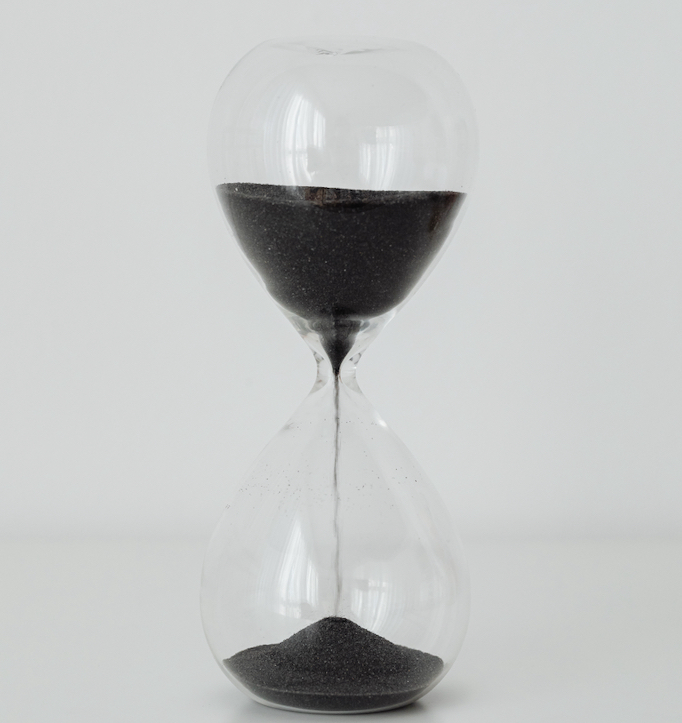
Are you wondering how to better manage your time every single day?
Do you want a quick and easy way to gauge your progress and observe the passage of time?
Here’s an interesting time question for you…just how long is fifteen minutes anyways?
The obvious answer is that fifteen minutes will always be fifteen minutes in length; not a minute more and not a minute less.
However, when it comes to your perception of those fifteen minutes, well, we’re talking about an entirely different beast.
In this post, you’ll find an interesting way of learning how to better manage your time.
It’s as simple as setting a timer and seeing what happens in the interim.
The aim of this exercise is to help you get in touch with the passage of time in a variety of situations.
Ready to get started? Here we go!
Step 1. Choose a couple of work or play situations to test.
Select a couple of different regular work, play or household tasks for your fifteen minute test.
These should be tasks you perform on a regular basis, such as checking your email, sitting in a meeting, or using a favorite social media channel.
You could even test watching your favorite TV show, doing laundry, walking your dog, reading a book, and so on and so forth.
You’ll want to have a way to take a couple of quick notes, so have a note keeping app or notebook and pen at the ready.
Step 2. Set a timer for 15 minutes.
Set a timer for fifteen minutes your cellphone or smartphone or set a plain old kitchen timer.
Whatever type of timer you use, just make sure it can be set for fifteen minutes and gives off an alarm when the time is up.
The alarm doesn’t have to be audible; you can use a vibrating alarm if you don’t want to disturb others.
Go ahead and perform whatever task it is you set out to do.
Step 3. Evaluate your findings.
It’s now time to review your time experiment. How did your fifteen minutes go?
Were you surprised at how fast the time went when you were on social media?
Were you not shocked to find out fifteen minutes moved very slowly during your weekly department meeting at work?
Could you believe the fifteen minutes you spent checking your email messages went by so quickly?
Jot down all your observations, good, bad or indifferent.
Step 4. Make adjustments to your perception of time.
Now it’s time to learn from your findings. How should you interpret your findings to better manage your time?
Well, it’s as simple as looking at where time seemed to fly by quickly versus where time seemed to pass by slowly and making adjustments as to how you approach time.
For those instances where time seemed to by fly, you’d probably want to either give yourself a set amount of time to complete a task so you won’t become completely immersed in it and lose track of time entirely.
For those instances where time appeared to go rather slowly, you’d most likely want to determine whether you are truly engaged and present in the moment (versus say, daydreaming) or if you are otherwise making the best use of your time.
This latter suggestion could be interpreted as performing a task or chore that needs to get done, but you could also use this instance to say, take a break and savor the moment for what it is — the unhurried, unrushed passage of time.
How about you? In what situations and locations in your daily life might you try this timing experiment? Join the conversation and leave a comment below!






0 Comments